Bounce House Party Planning: Safety and Setup Guide
Bounce houses create unforgettable memories at parties, but safety must come first. With over 30 children injured every day in inflatable-related accidents, understanding proper setup, supervision, and safety protocols is essential for any event. This comprehensive guide covers everything you need to know to host a safe, fun bounce house party.
Key Takeaways
- • Bounce house injuries increased by over 82,000 between 2000-2019
- • Wind speeds above 15 mph make bounce house operation unsafe
- • One child every 45 minutes is treated for inflatable bouncer injuries
- • Proper anchoring, supervision, and age grouping prevent most accidents
- • Professional delivery services ensure correct setup and safety compliance
Understanding Bounce House Safety Statistics
Before planning your party, it's important to understand the scope of bounce house safety. According to research from Nationwide Children's Hospital, more than 30 children per day—approximately one child every 45 minutes—are treated for inflatable bouncer-related injuries. Between 2000 and 2019, injuries increased by 82,748 cases, highlighting the critical importance of proper safety protocols.
The most common injuries include:
- Fractures (25.8%): Often from falls or collisions with other children
- Muscle strains (25.7%): From awkward landings or overexertion
- Contusions (14.5%): Impact injuries from bouncing surfaces or other children
- Lower extremity injuries: The most prevalent area of injury, including ankles, knees, and legs
However, these injuries are largely preventable. With proper setup, anchoring, supervision, and adherence to safety guidelines, you can significantly reduce risks and ensure children have a safe, enjoyable experience.
Weather Conditions: The #1 Safety Priority
Weather is the most critical factor in bounce house safety. Wind-related incidents pose the greatest danger, as even properly anchored inflatables can become unstable or airborne in high winds.
Wind Speed Guidelines
According to multiple safety organizations and rental companies, never operate a bounce house if wind speeds exceed 15 mph. As of 2025, there have been 6 weather-related bounce house incidents tracked, most involving wind gusts that exceeded safe operating conditions.
🌪️ Wind Safety Rule:
If wind starts blowing the tops of trees and appears to be gusting 20 mph or more, immediately evacuate children and deflate the unit. It's better to pause the fun temporarily than risk serious injury.
Other Weather Considerations
- Rain: Never use bounce houses during heavy rain. Wet surfaces increase fall risks and can compromise electrical equipment.
- Lightning: At the first sign of lightning, evacuate immediately. Lightning poses an electrocution risk.
- Extreme heat: Bounce houses can heat up to temperatures much higher than ambient air. In very hot weather, schedule bouncing during cooler parts of the day and ensure adequate hydration breaks.
- Cold weather: Inflatable materials can become stiff and brittle in freezing temperatures, increasing injury risk.
Weather Monitoring Plan
- 24 Hours Before: Check extended forecast for wind speeds, precipitation, and severe weather alerts
- Morning of Event: Verify current conditions and hourly forecast
- During Event: Continuously monitor wind and weather conditions
- Have a Backup Plan: Prepare alternative indoor activities if weather becomes unsafe
Space and Setup Requirements
Proper setup space prevents accidents and ensures safe operation. Inadequate space is one of the leading causes of preventable bounce house injuries.
Space Clearance Guidelines
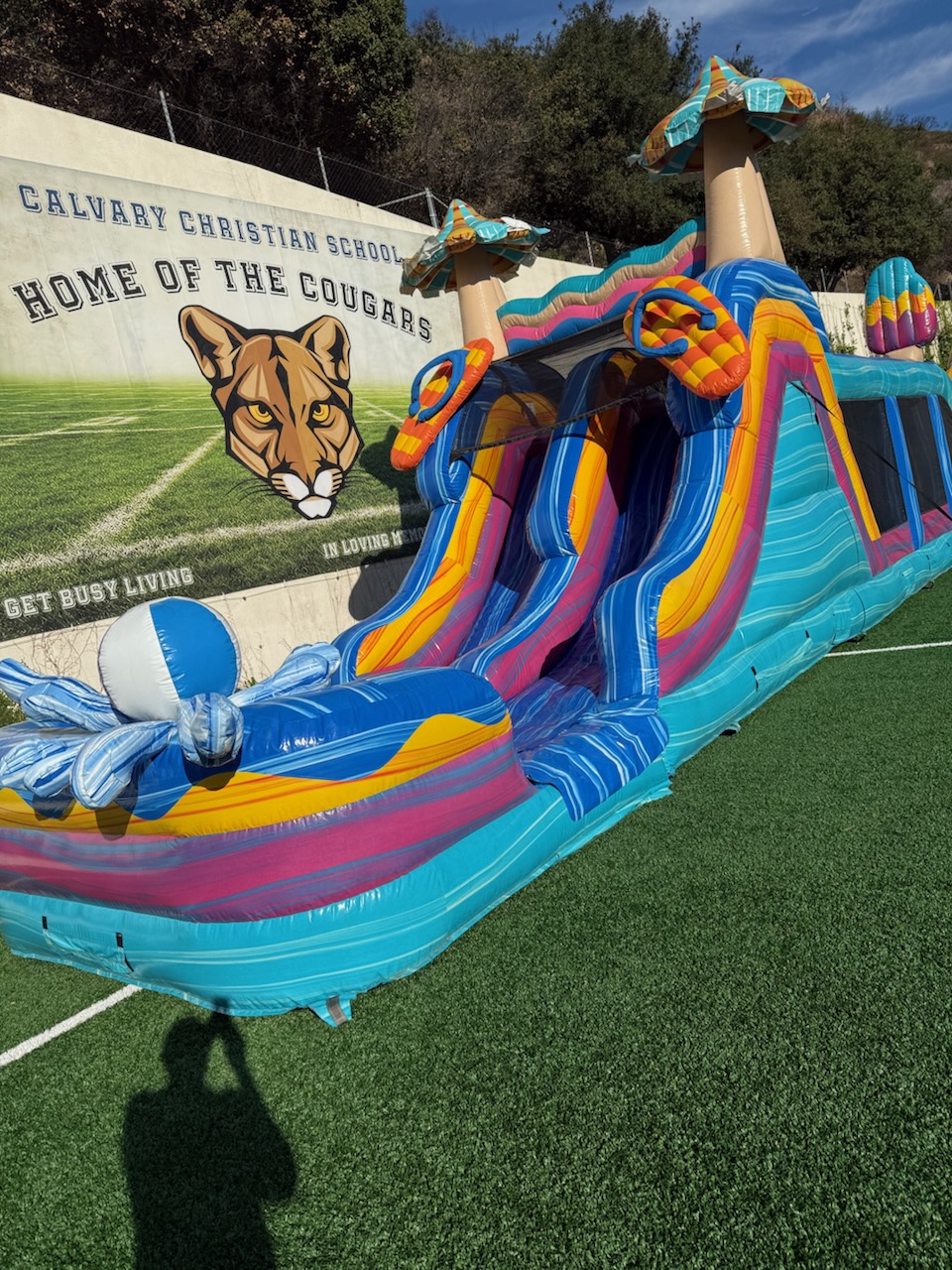
Add 5 feet of clearance on all sides of the bounce house. For a standard 15x15 ft unit, you'll need approximately 25x25 ft (625 sq ft) of total space. Larger combo units and water slides may require 40x20x20 ft or more.
Overhead clearance: Check for low-hanging branches, power lines, and overhead structures. Minimum ceiling height requirements vary by unit:
- Standard bounce houses: 15-20 feet clearance
- Tall slides: 20-25 feet clearance
- Indoor setups: Verify specific height with venue and rental company
Surface Requirements
The setup surface must be:
- Mostly flat: Uneven surfaces create tipping hazards
- Relatively firm: Soft mud or sand compromises stability
- Free of debris: Remove rocks, sticks, sprinkler heads, and sharp objects
Acceptable surfaces include:
- Grass (most common, allows for stake anchoring)
- Concrete (requires sandbag anchoring)
- Asphalt (requires sandbag anchoring)
- Indoor flooring (with protective padding around entrance/exit)
Pathway and Access
Ensure clear pathways for delivery and emergency access:
- Standard units: Minimum 48-inch wide pathways
- Large slides/obstacles: Minimum 60-inch wide pathways
- Gate and doorway clearances must accommodate equipment dimensions
Proper Anchoring: The Foundation of Safety
Inadequate anchoring is a leading cause of serious bounce house accidents. Every inflatable must be secured firmly to prevent tipping, sliding, or becoming airborne.
Anchoring Methods by Surface
Grass/Soil (Preferred Method):
- Use metal stakes at least 18 inches long
- Drive stakes at 45-degree angle for maximum hold
- Secure ALL anchoring points (typically 4-8 per unit)
- Check stakes are fully buried with only attachment loop exposed
Hard Surfaces (Concrete/Asphalt):
- Use heavy sandbags (40-50 lbs each minimum)
- Place one sandbag per anchoring point
- Position sandbags on attachment straps, not inside bounce house
- Consider additional anchoring for high-wind areas
⚠️ Critical Safety Warning:
Never skip anchoring or reduce the number of anchor points. Even in calm conditions, unexpected wind gusts can occur. Professional rental companies will refuse to set up without proper anchoring—you should too.
Pre-Operation Anchor Check
Before allowing anyone to enter:
- Verify all stakes are driven fully into ground at proper angle
- Check all attachment points are secured to stakes/sandbags
- Test stability by pushing gently on corners and sides
- Re-check anchoring every 2-3 hours during extended use
Power and Electrical Safety
Bounce houses require continuous power to maintain proper inflation. Electrical safety is essential to prevent shocks, fires, and equipment damage.
Power Requirements
- Standard outlet: 110-volt household outlet within 50-100 feet of setup location
- Dedicated circuit preferred: Avoid sharing the circuit with major appliances (refrigerators, air conditioners, power tools)
- GFCI protection: Use ground fault circuit interrupter outlets for outdoor setups
- Extension cords: If needed, use heavy-duty outdoor-rated cords (14-gauge or heavier)
Electrical Safety Checklist
- Inspect power cords for damage before connecting
- Keep all electrical connections elevated and dry
- Route cords away from foot traffic to prevent tripping
- Never operate in rain or when cords/outlets are wet
- Have generator backup for locations without power access
Age, Size, and Capacity Guidelines
Grouping children appropriately prevents collisions and injuries caused by size and strength differentials.
Age-Appropriate Usage
Under 2 years old:
- Limited balance, coordination, and spatial awareness
- Should only use toddler-specific bounce houses (lower height, gentler bounce)
- Require constant parental supervision—parent must be inside bounce house
- Never mix with children over age 3
Ages 2-5 (Toddlers/Preschoolers):
- Developing coordination but still vulnerable
- Best in small, low-height units designed for toddlers
- Should never bounce with children over age 7
- Close adult supervision at entrance and inside
Ages 4-12 (Most Appropriate Range):
- Have coordination and awareness to bounce safely
- Can follow and understand safety rules
- Still require active adult supervision
- Group by similar size, not just age
Teens and Adults:
- Can use large, commercial-grade units rated for higher weights
- Should never bounce with younger children (size differential creates collision risk)
- Must still respect weight limits and capacity guidelines
Weight Limits and Capacity
Every bounce house has maximum weight limits, typically ranging from 600-1000 lbs total capacity. However, professional operators follow the "70% rule"—never exceed 70% of maximum weight capacity. This provides a safety buffer for energetic jumping.
Standard capacity guidelines:
- Small units (10x10 ft): 3-4 children max
- Standard units (13x13 to 15x15 ft): 4-6 children max
- Large units (20x20 ft+): 6-8 children max
- Individual weight limit: Typically 160 lbs per person max
💡 Pro Tip from Rental Experts:
The safest way to use a bounce house is to have only one child at a time. While this isn't practical for parties, it highlights the importance of limiting capacity and grouping children by similar size to minimize collision risks.
Supervision Requirements: Non-Negotiable
Constant adult supervision is the single most important safety measure. According to safety experts, a responsible adult or trained attendant must always be present to enforce rules and intervene when needed.
Effective Supervision Strategy
Assign dedicated supervisors:
- Entrance Monitor: One adult watches entrance/exit, ensures children remove prohibited items, prevents overcrowding
- Activity Monitor: One adult watches inside behavior, enforces safety rules, stops roughhousing
- Rotation Schedule: For long events, rotate supervisors every 45-60 minutes to maintain attention
Supervisor responsibilities:
- Maintain visual contact with all children inside bounce house at all times
- Enforce capacity limits strictly
- Ensure age/size appropriate grouping
- Stop dangerous behavior immediately (flips, roughhousing, piling on)
- Monitor weather conditions continuously
- Ensure children take breaks (every 15-20 minutes in hot weather)
Supervision Don'ts
- ❌ No cell phone use while supervising
- ❌ No lengthy conversations that distract from monitoring
- ❌ Don't assume older children can supervise themselves
- ❌ Never leave children unattended "for just a minute"
- ❌ Don't supervise from inside a building or vehicle
Essential Safety Rules (Enforce Strictly)
Clear, consistently enforced rules prevent most bounce house injuries. Post rules visibly near the entrance and review with all children before they enter.
Before Entering: Required Safety Checks
- Remove shoes: Prevents punctures and reduces injury risk from hard soles
- Remove glasses: Broken glasses cause serious injuries
- Remove jewelry: Necklaces, bracelets, earrings can catch or cause cuts
- Empty pockets: Remove sharp objects, phones, keys, toys
- Remove accessories: Hair clips, belt buckles, watches, etc.
- Tie back hair: Long hair should be secured to prevent vision obstruction
Inside the Bounce House: Behavior Rules
- ✅ Bounce in the center, away from walls and entrance
- ✅ Keep space between yourself and others
- ✅ Enter and exit carefully (don't jump off entrance ramp)
- ✅ Alert adult immediately if you feel unwell or need to leave
- ❌ NO flips or somersaults (neck/head injury risk)
- ❌ NO roughhousing, pushing, or wrestling
- ❌ NO piling on top of other children
- ❌ NO food, drinks, or gum inside (choking hazard)
- ❌ NO sitting/lying in high-traffic areas
- ❌ NO climbing on walls or netting
Mandatory Break Schedule
- Every 15-20 minutes: Hydration break (especially in hot weather)
- After 45-60 minutes: Extended rest break of 10-15 minutes
- Watch for fatigue: Remove exhausted children immediately
Emergency Preparedness
Despite best precautions, emergencies can occur. Have a plan ready before the party begins.
Emergency Action Plan
Medical Emergency:
- Stop all bouncing immediately and evacuate uninjured children
- Assess injury—do not move child if neck/back injury suspected
- Call 911 for serious injuries (suspected fractures, head injuries, unconsciousness)
- Provide first aid as trained while waiting for emergency services
- Have emergency contact information for all attending children readily available
Weather Emergency (High Winds/Lightning):
- Evacuate all children immediately at first sign of dangerous weather
- Turn off blower and deflate unit if safe to do so
- Move children to safe indoor location
- Do not re-inflate until weather conditions are confirmed safe
Equipment Failure:
- If blower fails or bounce house begins deflating, evacuate calmly but quickly
- Keep children calm to prevent panic-related injuries during evacuation
- Check power connection and blower—if problem can't be resolved immediately, end bouncing session
- Contact rental company immediately for equipment issues
On-Site Safety Kit
Have these items readily available:
- First aid kit with bandages, ice packs, antiseptic
- Emergency contact list for all children
- Charged cell phone for emergency calls
- Weather monitoring app or radio
- Bottled water and shade for heat emergencies
- Rental company emergency contact number
The Professional Delivery Advantage
While it's possible to rent bounce houses for self-setup, professional delivery services provide critical safety benefits that prevent accidents before they happen.
What Professional Delivery Services Provide
- Expert Setup: Trained technicians ensure proper inflation, anchoring, and positioning
- Safety Compliance: Verification that all manufacturer safety specifications are met
- Equipment Inspection: Pre-delivery checks for damage, wear, or defects
- Proper Anchoring: Professional-grade stakes, sandbags, and attachment methods
- Site Assessment: Evaluation of setup location for hazards and proper clearance
- Liability Protection: Insurance coverage and responsibility for setup-related issues
At Locally Swift Transport, we specialize in safe delivery and pickup of bounce houses and party equipment, including massive 70-foot inflatables. Our professional equipment and experienced team ensure your bounce house is set up correctly from the start, giving you peace of mind to focus on hosting a great party.
Need Professional Bounce House Delivery?
Let our experienced team handle the heavy lifting. We deliver, set up, and pick up bounce houses of all sizes with professional equipment and proper safety protocols. From small backyard parties to 70-foot inflatables, we ensure safe, timely delivery.
Pre-Party Checklist
Use this comprehensive checklist to ensure nothing is overlooked:
One Week Before
- ☐ Confirm bounce house reservation with rental company
- ☐ Verify delivery time and setup location
- ☐ Check long-range weather forecast
- ☐ Measure setup area and confirm adequate space
- ☐ Clear setup area of debris and obstacles
- ☐ Identify power outlet locations
- ☐ Arrange for adult supervisors
24 Hours Before
- ☐ Check updated weather forecast (wind speeds especially)
- ☐ Confirm delivery time with rental company
- ☐ Mow grass if setup area is lawn
- ☐ Remove any new debris from setup area
- ☐ Test power outlets
- ☐ Prepare safety kit and emergency supplies
- ☐ Collect emergency contact information for all attending children
Morning of Event
- ☐ Check current wind speeds and hourly forecast
- ☐ Walk setup area one final time for hazards
- ☐ Ensure clear path for delivery truck
- ☐ Have adult supervisors arrive early for briefing
- ☐ Prepare sign with posted safety rules
After Setup (Before First Use)
- ☐ Inspect anchoring at all points (stakes or sandbags secure)
- ☐ Check bounce house is fully inflated
- ☐ Verify blower is running properly and securely connected
- ☐ Test stability by pushing gently on corners and sides
- ☐ Check for proper clearances on all sides
- ☐ Inspect surface for wear, tears, or damage
- ☐ Verify entrance/exit area is clear and safe
- ☐ Post safety rules visibly
- ☐ Brief supervisors on responsibilities
- ☐ Have emergency plan and contacts ready
Conclusion: Safety Creates Better Memories
Bounce houses bring joy and excitement to any party, but only when operated safely. The statistics are sobering—one child injured every 45 minutes—but they don't have to define your event. With proper setup, vigilant supervision, clear safety rules, and professional delivery, you can create a fun, memorable party that everyone enjoys without incident.
Key principles to remember:
- Never operate in winds above 15 mph or during storms
- Anchor properly with all attachment points secured
- Group children by similar age and size
- Maintain constant adult supervision
- Enforce safety rules consistently
- Consider professional delivery for proper setup
The few minutes spent on safety planning and the vigilance to enforce rules throughout the event make the difference between a great party and a trip to the emergency room. Your guests trust you to keep their children safe—honor that trust by making safety your top priority.
When you're ready to plan your next bounce house party, contact the professionals at Locally Swift Transport. We'll ensure your equipment is delivered safely, set up correctly, and ready for hours of supervised fun.
About Locally Swift Transport
Since 2011, Locally Swift Transport has provided professional moving, delivery, and party equipment transport services. With hydraulic liftgate capabilities and experienced professionals, we safely handle everything from 70-foot bounce houses to heavy appliances. Our commitment to safety and customer satisfaction makes us the trusted choice for residential moves and event equipment delivery.
Contact us for professional bounce house delivery →